
Understanding the Two Convenience Food Giants
In today’s fast-paced world, convenience foods have become an essential part of our daily lives. Whether you are a student living in a hostel, a working professional with a hectic schedule, or a traveller exploring new places, you have likely encountered both instant food and ready to eat food. While many people use these terms interchangeably, they represent distinctly different product categories with unique preparation methods, use cases, and nutritional profiles.
Understanding the instant food vs ready to eat food debate is crucial for making informed choices about what you eat. The India instant food market is experiencing robust growth, with changing distribution channels reflecting the growing need for convenience and the expanding reach of instant foods across the country.

The confusion between instant food vs ready to eat food is understandable. Both instant food and ready to eat food are designed to save time and effort in the kitchen. Both come in convenient packaging and require minimal preparation compared to cooking from scratch. However, understanding the difference between instant food and ready to eat food can help you make better choices based on your lifestyle, available facilities, and nutritional needs. According to the USDA research, convenience foods are categorized by the level of preparation required before consumption, which is exactly what the instant food vs ready to eat food comparison highlights.
The India convenience food market is witnessing significant transformation. According to market research, the India instant meals market is anticipated to experience robust expansion, with manufacturers focusing on introducing healthier and more diverse instant meal options to cater to evolving consumer preferences. The Indian market for convenience foods stood at $6.65 billion in 2024 and is expected to reach $11.88 billion by 2033, growing at a CAGR of 6.14%. This growth reflects the changing lifestyles of urban Indians who are increasingly seeking convenient meal solutions without compromising on taste and nutrition. The instant food vs ready to eat food segment is a major contributor to this growth.
The shift toward convenience foods has been further accelerated by external factors. Recent LPG shortages have led to a surge in sales of instant food options and frozen snacks by up to 20% month-on-month as households look to conserve scarce cooking gas. This may lead to a long-term shift in consumer behaviour, with categories like ready meals, frozen snacks, instant noodles, and ready-to-cook products seeing strong traction. According to Frontiers in Sustainable Food Systems, the availability of ultra-processed foods in India is widespread, making it crucial for consumers to understand the instant food vs ready to eat food distinction.
This comprehensive guide will help you understand the instant food vs ready to eat food debate in detail. We will explore what each category means, provide examples, compare their preparation methods, discuss nutritional considerations, and help you choose the right option for your lifestyle. We will also examine where traditional Indian options like Bundelkhand’s Famous Instant Sattu Meal fit into this convenience food landscape. For a broader understanding of the category, explore our instant food guide.
What is Ready to Eat Food?
Ready to eat food (RTE) refers to fully cooked meals and dishes that require no further preparation before consumption. These foods are designed to be eaten directly from the package, though some may benefit from gentle heating for an enhanced eating experience. The key characteristic of ready to eat food is that all cooking has already been done by the manufacturer. Ready-to-eat foods are fully prepared and cooked dishes that require no additional cooking or preparation. They can be consumed straight out of the packaging and are designed for immediate consumption. In the instant food vs ready to eat food comparison, ready-to-eat foods represent the ultimate convenience with zero preparation required.
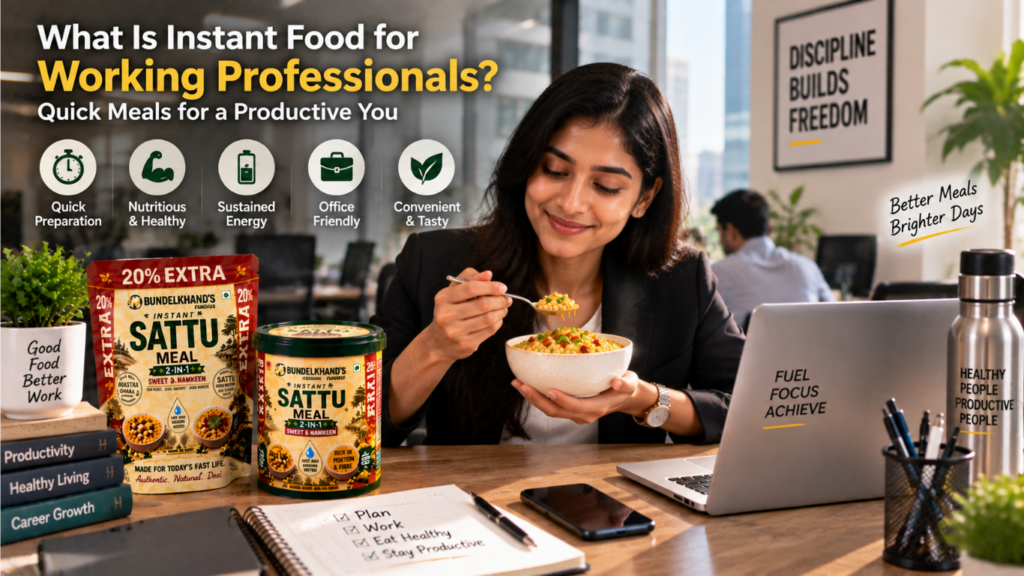
According to the USDA classification, ready-to-eat (RTE) meals and snacks require no preparation beyond opening a container, such as refrigerated dishes, yogurt, and candy. Similarly, the DBpedia definition describes convenience food as “food that is commercially prepared (often through processing) to optimize ease of consumption. Such food is usually ready to eat without further preparation. It may also be easily portable, have a long shelf life, or offer a combination of such convenient traits.” When discussing instant food vs ready to eat food, it’s important to note that ready-to-eat foods require no additional steps before eating.
Key Characteristics of Ready to Eat Food
| Characteristic | Explanation |
|---|---|
| Fully Cooked | The food has undergone complete cooking during manufacturing |
| No Cooking Required | You don’t need to cook, boil, or add water |
| Minimal Effort | Open the pack and eat, or heat briefly |
| Instant Consumption | Can be eaten immediately after opening |
| Packaged | Comes in sealed pouches, cans, or trays |
| Shelf-Stable Options | Some require refrigeration; others have long shelf life |
Common Examples of Ready to Eat Food
| Category | Examples |
|---|---|
| Indian Curries | Dal makhani, paneer butter masala, palak paneer |
| Rice Dishes | Ready rice meals, biryani, pulao |
| Traditional Indian | Millet khichdi, millet pongal |
| Snack Items | Protein bars, nut crackers, cookies |
| Salads | Packaged bean salads, lentil salads |
| Canned Foods | Canned vegetables, beans, fruits |
Millet-based ready-to-eat foods like millet khichdi or millet pongal come in sealed packages, enabling you to consume them right out of the pack or after a little warming up. According to the Food and Agriculture Organization (FAO), traditional millet-based ready to eat foods are gaining popularity due to their nutritional benefits. In the instant food vs ready to eat food comparison, these products represent the ready-to-eat category.
How Ready to Eat Food Is Made
Ready to eat food is typically produced using advanced food processing technologies:
1. Retort Technology
- Food is cooked, sealed in a pouch, and sterilised at high temperatures
- Extends shelf life without artificial preservatives
- Texture often becomes soft due to high heat processing
2. Freeze-Drying
- Food is cooked, frozen, and dried under vacuum
- Preserves flavour, texture, and nutrients better
- Lightweight and shelf-stable
3. Sealed Packaging
- Advanced packaging keeps food fresh for months
- Can be stored at room temperature
The rise of frozen packaging, particularly in frozen snacks and ready-to-eat meals, is another significant trend in the Indian market. Brands like McCain and Britannia Good Day Frozen Snacks offer frozen products that provide consumers with convenient meal options that can be stored in freezers and prepared quickly.
Who Uses Ready to Eat Food?
Ready to eat food is popular among:
- Travellers who need food without preparation
- Working professionals who don’t have time to cook
- Students in hostels with no cooking facilities
- Families looking for quick meal backups
- Campers and outdoor enthusiasts
According to a study on food environments in the National Capital Region of India, ultra-processed foods are widely available, with 100% of stores having ultra-processed foods available. Candy, chocolate, cookies, potato chips, namkeen (a savory snack), and fruit juice were the most commonly found ultra-processed food items. This is why understanding the instant food vs ready to eat food distinction is crucial for making healthier choices.
What is Instant Food?
Instant food refers to food products that are partially prepared and require a final preparation step by the consumer before consumption. These products are designed to be quick and easy to prepare, but they are not ready to eat directly from the package. The key characteristic of instant food is that you complete the final preparation step—adding water, mixing, stirring, or brief heating. In the instant food vs ready to eat food comparison, instant foods require some effort from the consumer before eating.
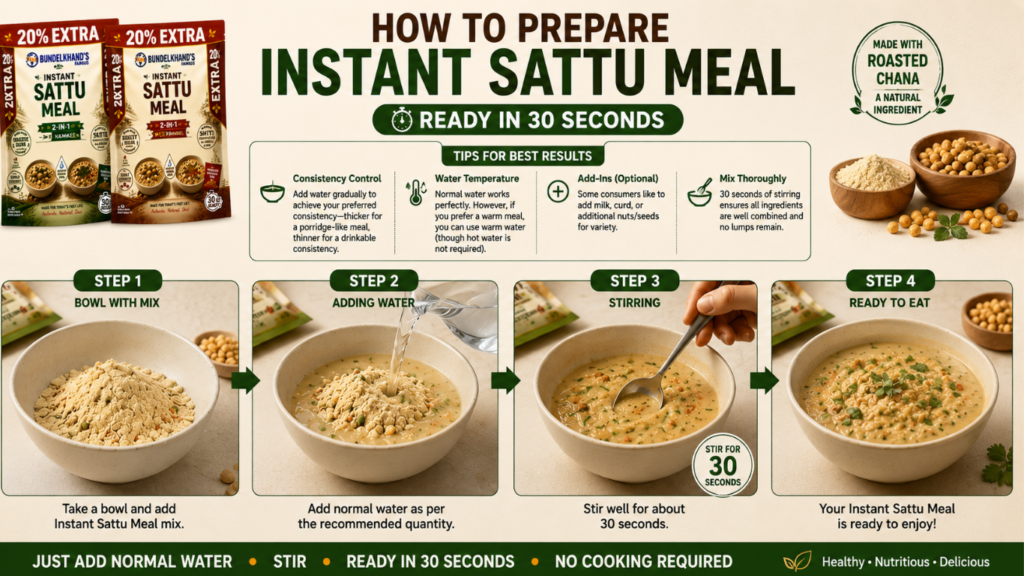
Instant foods typically require minimal preparation and cooking, often involving the addition of hot water, microwave heating, or a short cooking time. They are not fully cooked and may need some degree of preparation before consumption. When comparing instant food vs ready to eat food, instant foods offer more control and customization options.
According to the definition used in research, instant food is “prepared food products that can be consumed directly after opening and can be summarised as ‘ready-to-eat’ food.” However, this definition can sometimes create confusion, as it groups instant and ready-to-eat foods together. The more precise understanding is that instant foods require some preparation step, while ready-to-eat foods do not. This is a key distinction in the instant food vs ready to eat food debate.
Key Characteristics of Instant Food
| Characteristic | Explanation |
|---|---|
| Partially Prepared | Some cooking or processing has been done |
| Requires Final Step | You must add water, mix, or heat |
| Quick Preparation | Usually takes 30 seconds to 5 minutes |
| Lightweight | Dry format without water content |
| Portable | Easy to carry and store |
| Customizable | You can adjust consistency and add ingredients |
Common Examples of Instant Food
| Category | Examples |
|---|---|
| Noodles | Instant noodles, cup noodles |
| Traditional Indian | Instant poha, instant upma, instant sattu meal |
| Breakfast Mixes | Instant idli, dosa, upma mixes |
| Porridge/Cereal | Instant oats, porridge mixes |
| Beverages | Ready-to-mix drinks, protein shakes |
| Soup Mixes | Instant soup powders |
How Instant Food Is Made
Instant food is typically made by:
- Cooking or partially cooking ingredients
- Drying them (using heat or freeze-drying)
- Grinding into powder or forming into shapes
- Packaging in dry, shelf-stable formats
For traditional Indian instant foods like sattu, the process is much simpler:
- Chana (Bengal gram) is roasted
- Ground into flour
- Packaged without additives
- Consumer adds water and mixes
Bundelkhand’s Famous Instant Sattu Meal follows this traditional process, offering 20-25% protein with no artificial additives. According to Healthians, sattu is packed with 18g dietary fibre per 100g and has cooling properties that make it ideal for summer consumption. In the instant food vs ready to eat food comparison, Bundelkhand’s Famous Instant Sattu Meal represents the healthier instant food option.
Who Uses Instant Food?
Instant food is popular among:
- Students in hostels with no cooking facilities
- Travellers who need lightweight, portable food
- Working professionals who want quick meals
- Families looking for backup meal options
- Health-conscious consumers choosing traditional options
Instant Food vs Ready to Eat Food: Key Differences
At a Glance Comparison
When comparing instant food vs ready to eat food, the differences are clear across multiple dimensions:
| Aspect | Ready to Eat Food | Instant Food |
|---|---|---|
| Definition | Fully cooked, can be eaten directly | Requires final preparation step |
| Preparation | Open and eat (or heat briefly) | Add water/mix/stir |
| Cooking Required | None | Minimal (add water, stir) |
| Water Needed | No | Usually yes |
| Heating | Optional (for taste) | Often required (hot water) |
| Weight | Heavier (includes water) | Lightweight (dry format) |
| Price | Generally more expensive | Generally more affordable |
| Customization | Limited | High |
| Shelf Life | Variable; some need refrigeration | Generally long |
| Additives | May include thickeners, stabilisers | Often minimal in traditional options |
Detailed Comparison of Instant Food vs Ready to Eat Food
In the instant food vs ready to eat food comparison, ready to eat food requires zero preparation time—you can open and eat immediately. Instant food requires minimal preparation, typically 30 seconds to 5 minutes. Bundelkhand’s Famous Instant Sattu Meal takes just 30 seconds, making it one of the fastest options in the instant food vs ready to eat food comparison.
When comparing instant food vs ready to eat food, ready to eat food requires no cooking at all. Instant food usually requires some form of heating or cooking, but the process is quick and simple. For example, instant noodles require boiling in hot water, while Bundelkhand’s Famous Instant Sattu Meal requires only normal water, making it even more convenient.
3. Shelf Life
In the instant food vs ready to eat food debate, ready to eat foods often have a longer shelf life because they are precooked and sealed to preserve freshness. They may be stored at room temperature or in the refrigerator. Instant foods typically have a shorter shelf life than ready to eat foods because they are partially processed and may contain ingredients that can degrade over time. They often need to be stored in a cool, dry place.
When examining instant food vs ready to eat food, ready to eat foods come in a wide variety and can include complex dishes like pre-made salads, sandwiches, or gourmet meals. Instant foods are often simpler and more limited in terms of variety, usually single items or basic meals.
In the instant food vs ready to eat food comparison, ready to eat foods offer the highest level of convenience as they are fully prepared and require no cooking or additional steps. Instant foods are also convenient but require some degree of preparation, such as adding hot water or minimal cooking, before they are ready to eat.
The nutritional content of ready to eat foods can vary widely—some may be relatively healthy, while others could be high in preservatives, salt, or sugar. The nutritional value of instant foods can also vary, but they are generally processed and may contain additives. However, there are healthier instant food options available like Bundelkhand’s Famous Instant Sattu Meal with 20-25% protein. This is an important consideration in the instant food vs ready to eat food choice.
The India Convenience Food Market: Trends and Insights
Market Growth and Trends
The India instant food market is experiencing significant growth. Packaging plays a crucial role in the success of instant food products in India, where convenience and practicality are key factors driving consumption. In the case of normal packaging, products like Maggi Noodles and Pringles use easy-to-carry and resealable packaging to ensure freshness and portability, catering to the fast-paced lifestyles of urban dwellers.
The packaging materials used are often designed to enhance shelf-life, with vacuum-sealed or air-tight wrappers that maintain the taste and quality of the product over time. Similarly, breakfast cereals like Quaker Oats and Kellogg’s Cornflakes come in sturdy, protective packaging that ensures the product remains crisp and fresh. For instant ready meals like ITC Kitchens of India and Britannia’s Ready Meals, packaging includes microwave-safe containers and resealable pouches for ease of preparation.
The Rise of Healthier Options
Manufacturers are introducing differentiated offerings such as millet-based mixes, protein-enriched meals, plant-based products, international cuisine kits, and preservative-free formulations. Innovation in packaging (microwaveable bowls, retort packaging, vacuum sealing) has enhanced shelf life and ease of consumption. Premium and specialised products are attracting urban consumers seeking variety and quality in convenience foods. This trend is particularly relevant to the instant food vs ready to eat food market.
Quick Commerce and Distribution Channels
The rise of quick-commerce platforms delivering groceries within short time windows has strengthened impulse purchasing of convenience foods. RTC and instant meal products are among frequently stocked categories due to their high repeat consumption and ease of storage. This channel also supports discovery of new brands and SKUs, leading to increased purchase frequency and higher visibility of convenience foods. The instant food vs ready to eat food segment has benefited significantly from this trend.
The LPG Crisis Impact
Recent LPG shortages have led to a surge in sales of instant food options and frozen snacks by up to 20% month-on-month as households look to conserve scarce cooking gas. Categories such as ready meals, frozen snacks, instant noodles, and ready-to-cook products have seen strong traction, leading to about a 10-12% rise in this segment. This may lead to a long-term shift in consumer behaviour towards adapting ready-to-eat products even when things normalise.
Traditional Indian Instant Food: The Best of Both Worlds
India’s Rich Instant Food Heritage
India has a long tradition of instant foods—foods that require minimal preparation and can be consumed quickly. While modern instant noodles are a recent phenomenon, traditional Indian instant foods have existed for centuries. According to research from CSIR-IHBT, ready-to-cook and instant food products such as dalia, khichdi, and traditional beverage mixes have been developed, enriched with proteins, iron, zinc, calcium, and vitamins. These products use nutrient-dense ingredients such as millets, pseudo-cereals, and pulses, and contain no chemical additives or preservatives.
Traditional Indian instant foods include:
- Sattu: Roasted chana flour, mixed with water
- Instant Poha: Flattened rice that softens quickly
- Instant Upma: Semolina-based savoury dish
- Instant Khichdi: Rice and dal mix
- Traditional beverage mixes: Enriched with proteins and micronutrients
Sattu: India’s Original Superfood
One such original superfood of India is Sattu. Made from roasted Bengal gram (chana or chana dal), it is making a powerful comeback and gaining traction not only in India but worldwide. Packed with protein and fibre, its cooling properties make Sattu a fantastic energy drink with several other health benefits. Fitness enthusiasts, nutritionists, and even urban millennials are turning to this traditional ingredient for its wholesome benefits, versatility and affordability. In the instant food vs ready to eat food landscape, sattu represents the traditional, healthier instant food option.
Sattu is a flour or powder made by roasting and grinding roasted Bengal gram (chana). It’s been a staple in many Indian households across eastern states like Bihar, Uttar Pradesh, and Jharkhand.
Types of Sattu
While sattu is most commonly referred to as chana sattu, it’s not the only kind. There are a few other types of sattu that are quite popular in India:
- Jau sattu, made from roasted barley, is mostly used as a cooling summer drink. Like chana sattu, jau sattu is also packed with dietary fibre and protein.
- Wheat sattu is made from roasted whole wheat and is a good source of B vitamins. Packed with healthy carbohydrates, wheat sattu is a great option if you are looking for sustained energy.
- Multigrain sattu is a mix of different grains, usually made by combining roasted chickpeas, barley and wheat. It gives you the benefits of multiple grains in one, making it a more balanced and nutritious option.
Instant Sattu Meal: A Traditional Superfood
Sattu is one of the most nutritious instant food options available in India. Made from roasted chana (Bengal gram), it is packed with protein, fibre, and essential minerals. Bundelkhand’s Famous Instant Sattu Meal brings this traditional superfood into a modern, convenient format.
| Nutrient | Amount (per 100g) | Benefit |
|---|---|---|
| Protein | 20-25g | Sustained energy |
| Dietary Fibre | 18g | Digestive health |
| Iron | 5mg | Prevents anaemia |
| Magnesium | 120mg | Metabolism, bone health |
| Calories | 390 kcal | Energy |
| Cholesterol | Zero | Heart health |
According to Healthians, sattu nutritional value per 100g includes 390 kcal calories, 20g protein, 18g dietary fiber, 5mg iron, and 120mg magnesium. The carbs in sattu are mostly complex carbs, which provide sustained energy that is great for staying active, unlike the crash you experience with sugar intake.
The healthy fats in sattu help with nutrient absorption and brain function, and the iron, magnesium, and manganese in sattu improve metabolism, boost energy and keep your bones stronger. One of the most powerful benefits of chana sattu that makes it more valuable is that it is plant-based, gluten-free and easy to digest, making it a great option for people of all ages, including kids and the elderly, and those with gluten sensitivity.
7 Amazing Health Benefits of Sattu Powder
According to Healthians, sattu may look simple, but it is a great choice for energy, strength, and digestive health. Here are some of the top benefits:
1. Supports Weight Management
Sattu can help with both weight loss and weight gain, and it all depends on how you use it in varied recipes. Sattu for weight loss would require you to mix the powder with a glass of water, lemon, and a pinch of salt and cumin powder (optional) on an empty stomach. This sattu drink for weight loss keeps you full for longer while keeping you energised throughout the day due to its high protein and fibre content. On the other hand, to use sattu for weight gain, you can mix it with milk and jaggery for a calorie-dense, nutritious drink.
2. Boosts Energy Naturally
Due to its high content of protein, complex carbs, and iron, sattu is known as a natural energy booster. A glass in the morning or midday can keep you energised throughout the day and help in keeping the cravings for sugary snacks or caffeine at bay.
3. Improves Digestion
Amongst the most powerful sattu benefits is how it improves digestion.
Why Bundelkhand’s Famous Instant Sattu Meal is Perfect:
| Feature | Benefit |
|---|---|
| 30-second preparation | Faster than any other instant food |
| Normal water only | No hot water needed |
| 20-25% protein | Sustained energy |
| No artificial additives | Clean, natural ingredients |
| Sweet & Namkeen options | Choice based on preference |
| Gluten-free | Suitable for gluten-sensitive individuals |
| Plant-based | Suitable for vegans and vegetarians |
Which is Better for You: Ready to Eat or Instant Food?
Decision Framework
| If You Need… | Choose… | Why |
|---|---|---|
| Immediate food with zero prep | Ready to Eat | Open and eat |
| Lightweight travel food | Instant Food | Dry format, lighter |
| Budget-friendly option | Instant Food | Generally more affordable |
| Hot, freshly prepared meal | Instant Food | You prepare it fresh |
| Customizable meal | Instant Food | Adjust consistency, add ingredients |
| No water available | Ready to Eat | No water needed |
| Traditional Indian food | Bundelkhand’s Famous Instant Sattu Meal | Traditional, minimally processed |
Which is Better for Travelling?
| Factor | Ready to Eat | Instant Food |
|---|---|---|
| Portability | Heavier, more volume | Lightweight, compact |
| Preparation | Open and eat—zero prep | Need water and a bowl |
| Spillage Risk | High (liquids) | Low (dry format) |
| Cost | More expensive | More affordable |
Bundelkhand’s Famous Instant Sattu Meal is an excellent choice for travellers with its lightweight 140g pack and 30-second preparation. In the instant food vs ready to eat food comparison for travel, instant food often wins due to its lightweight format.
Which is Better for Students in Hostels?
| Factor | Ready to Eat | Instant Food |
|---|---|---|
| Kitchen Access | Not required | Not required |
| Water Required | Not required | Water needed |
| Hot Water Needed | Not required | Often needed (not always available) |
| Cost | More expensive | More affordable |
| Flexibility | Limited | High |
Bundelkhand’s Famous Instant Sattu Meal requires only normal water, making it perfect for hostels. According to market research, urban rental housing, shared living spaces and student populations further support demand for compact, easy-to-store packaged meals.
Which is Better for Working Professionals?
| Factor | Ready to Eat | Instant Food |
|---|---|---|
| Preparation Time | 0 seconds | 30 seconds – 5 minutes |
| Mess Factor | Minimal | Minimal |
| Storage | Desk drawer possible | Desk drawer possible |
| Nutrition | Varies | Traditional options are nutritious |
For students looking for convenient meal options, check our instant food for students guide. For office workers, our instant food for working professionals guide offers desk-friendly solutions. If you’re travelling, our instant food for travel guide provides excellent portable options.
Frequently Asked Questions About Instant Food vs Ready to Eat Food
1. What is the difference between instant food and ready to eat food?
Answer: Ready to eat food is fully cooked and can be consumed directly from the package without any preparation. Instant food requires a final preparation step by the consumer, such as adding water, mixing, or brief heating before consumption. Bundelkhand’s Famous Instant Sattu Meal is a perfect example of healthy instant food that requires only 30 seconds of mixing with normal water. This is the fundamental distinction in the instant food vs ready to eat food comparison. Learn More →
2. Is instant food the same as ready to eat food?
Answer: No, they are different categories. Many people use these terms interchangeably, but they represent distinct product types with different preparation methods. Ready to eat food requires zero preparation, while instant food requires some preparation like adding water or heating. Bundelkhand’s Famous Instant Sattu Meal is an instant food, not a ready-to-eat product. Understanding this difference is key to the instant food vs ready to eat food debate.
3. What are examples of ready to eat food?
Answer: Examples include pre-cooked curries (dal makhani, paneer butter masala), ready rice meals, canned soups, packaged salads, protein bars, and millet khichdi in sealed pouches. These can be eaten directly from the package. For a healthier instant alternative in the instant food vs ready to eat food comparison, try Bundelkhand’s Famous Instant Sattu Meal with 20-25% protein.
4. What are examples of instant food?
Answer: Examples include instant noodles, instant poha, instant upma, instant idli/dosa mixes, instant sattu meal, instant oatmeal, and instant soup powders. Bundelkhand’s Famous Instant Sattu Meal is a traditional Indian instant food made from roasted chana with no additives. These represent the instant side of the instant food vs ready to eat food comparison.
5. Which is healthier: instant food or ready to eat food?
Answer: It depends on the specific product. Traditional instant foods like Bundelkhand’s Famous Instant Sattu Meal are minimally processed with 20-25% protein and high fibre. Ready to eat food can be healthy if made with clean ingredients and advanced preservation technologies. Always read labels and choose options like Bundelkhand’s Famous Instant Sattu Meal that contain no artificial additives. This is an important consideration in the instant food vs ready to eat food choice.
6. Which is better for travel: instant food or ready to eat food?
Answer: For weight-conscious travel, instant food is often better because it’s lightweight and compact. Bundelkhand’s Famous Instant Sattu Meal is perfect for travel with its 140g lightweight pack and normal water preparation. Ready to eat food is better when you have no access to water. In the instant food vs ready to eat food comparison for travel, instant food often wins.
7. Does ready to eat food contain preservatives?
Answer: Not necessarily. Modern food technologies like retort processing extend shelf life without artificial preservatives. However, Bundelkhand’s Famous Instant Sattu Meal contains no preservatives at all, making it a cleaner choice in the instant food vs ready to eat food comparison.
8. Is instant sattu meal considered instant food or ready to eat food?
Answer: Instant sattu meal is an instant food because it requires mixing with water and stirring before consumption. Bundelkhand’s Famous Instant Sattu Meal takes just 30 seconds to prepare with normal water—it is not ready to eat directly from the package. This is a clear example in the instant food vs ready to eat food distinction.
9. Which is more affordable: instant food or ready to eat food?
Answer: Instant food is generally more affordable than ready to eat food because it doesn’t include the cost of water weight, cooking, and heavy packaging. Bundelkhand’s Famous Instant Sattu Meal offers excellent value for money with high protein content. This is an important factor in the instant food vs ready to eat food decision.
10. Can ready to eat food be eaten without heating?
Answer: Yes, ready to eat food can be consumed directly from the package without heating. Heating is optional and only for taste enhancement. Bundelkhand’s Famous Instant Sattu Meal can be prepared with normal water, no heating required. This is a key difference in the instant food vs ready to eat food comparison.
11. What makes sattu a healthy instant food?
Answer: Sattu contains 20-25% protein, 18g dietary fibre per 100g, zero cholesterol, and no artificial additives. Bundelkhand’s Famous Instant Sattu Meal provides sustained energy and supports digestive health with its natural ingredients. In the instant food vs ready to eat food comparison, sattu represents the healthier instant option.
12. How long does instant food preparation take?
Answer: Instant food preparation typically takes 30 seconds to 5 minutes. Bundelkhand’s Famous Instant Sattu Meal takes just 30 seconds—faster than instant noodles which take 3-5 minutes. This speed is a key advantage in the instant food vs ready to eat food comparison.
13. What are traditional Indian instant foods?
Answer: Traditional Indian instant foods include sattu, instant poha, instant upma, instant khichdi, and traditional beverage mixes. Bundelkhand’s Famous Instant Sattu Meal is a modern take on traditional sattu, combining 90% chana with other grains for enhanced nutrition. These traditional options are often healthier in the instant food vs ready to eat food comparison.
14. Which is better for students in hostels?
Answer: For students in hostels, instant food that can be prepared with normal water (like Bundelkhand’s Famous Instant Sattu Meal) is ideal. No kitchen, no hot water, no cooking needed. Ready to eat food is also convenient when no water is available. In the instant food vs ready to eat food comparison for hostels, instant food with normal water preparation wins. Learn more at instant food for students.
15. Can I store instant food at my desk?
Answer: Yes, most instant foods have a long shelf life and can be stored in desk drawers. Bundelkhand’s Famous Instant Sattu Meal is perfect for working professionals who need backup meal options at their desk. This convenience is a key factor in the instant food vs ready to eat food choice for professionals.
16. Are there healthy instant food options?
Answer: Yes, there are many healthy instant food options available. Traditional options like Bundelkhand’s Famous Instant Sattu Meal are minimally processed with 20-25% protein and high fibre. Modern brands also offer protein-enriched instant foods. For more options, check healthy instant food options.
17. What is the difference between retort technology and freeze-drying?
Answer: Retort technology uses high heat to sterilise food in sealed pouches. Freeze-drying preserves food by freezing and drying under vacuum. Unlike retort-processed foods, Bundelkhand’s Famous Instant Sattu Meal uses traditional roasting, preserving natural nutrients without artificial preservatives. Understanding these technologies helps in the instant food vs ready to eat food decision.
18. What is the shelf life of ready to eat food?
Answer: Ready to eat food shelf life varies. Retort-processed foods can last 6-12 months at room temperature. Some require refrigeration. Bundelkhand’s Famous Instant Sattu Meal has an excellent shelf life due to its dry roasted format. This is an important consideration in the instant food vs ready to eat food comparison.
19. What is the shelf life of instant food?
Answer: Instant foods typically have long shelf lives because they are dry formats. Traditional instant foods like Bundelkhand’s Famous Instant Sattu Meal can last months without refrigeration due to the roasting process. This makes instant food convenient in the instant food vs ready to eat food comparison.
20. How does convenience food impact health?
Answer: According to research from the Frontiers in Sustainable Food Systems, ultra-processed foods are widely available in India, and they are often high in sodium, sugar, and unhealthy fats. Choosing traditional options like Bundelkhand’s Famous Instant Sattu Meal with no additives can help maintain better nutrition. This is a crucial consideration in the instant food vs ready to eat food choice.
21. What are the categories of convenience foods?
Answer: According to USDA research, convenience foods are categorized into:
- Basic ingredients
- Complex ingredients
- Ready-to-cook (RTC) meals and snacks
- Ready-to-eat (RTE) meals and snacks
Bundelkhand’s Famous Instant Sattu Meal falls under the instant food category with 30-second preparation.
22. Is sattu considered ultra-processed food?
Answer: No, sattu is a minimally processed traditional food. According to food classification systems, sattu falls under minimally processed foods because it is made from roasted chana with no additives. Bundelkhand’s Famous Instant Sattu Meal maintains this traditional, minimally processed character with 20-25% protein. This distinguishes it in the instant food vs ready to eat food landscape.
23. What is the nutritional value of sattu per 100g?
Answer: According to Healthians, sattu contains 390 kcal calories, 20g protein, 18g dietary fibre, 5mg iron, and 120mg magnesium per 100g. The National Institute of Nutrition confirms sattu contains protein, dietary fibre, iron, magnesium, phosphorus, and calcium. This nutritional profile makes sattu a standout in the instant food vs ready to eat food comparison.
24. Is sattu good for weight management?
Answer: Yes, sattu can help with both weight loss and weight gain. For weight loss, mix sattu powder with water, lemon, salt, and cumin powder on an empty stomach. For weight gain, mix with milk and jaggery for a calorie-dense drink. Bundelkhand’s Famous Instant Sattu Meal offers this flexibility, making it a versatile choice in the instant food vs ready to eat food debate.
25. What makes sattu plant-based and gluten-free?
Answer: Sattu is made from roasted Bengal gram (chana), making it naturally plant-based and gluten-free. This makes it suitable for people of all ages, including kids and the elderly, and those with gluten sensitivity. Bundelkhand’s Famous Instant Sattu Meal maintains these natural properties, which is a significant advantage in the instant food vs ready to eat food comparison.
26. How does sattu compare to instant noodles?
Answer: Sattu offers higher protein (20-25%) than instant noodles, contains no additives, and requires only normal water. Instant noodles typically contain high sodium, low protein, and require hot water. Bundelkhand’s Famous Instant Sattu Meal is a healthier alternative. This comparison is central to the instant food vs ready to eat food discussion.
27. What is the role of packaging in instant food?
Answer: Packaging plays a crucial role in instant food success. Products like Maggi Noodles and Pringles use easy-to-carry and resealable packaging to ensure freshness and portability. Bundelkhand’s Famous Instant Sattu Meal comes in compact, easy-to-store packaging ideal for students and professionals.
28. How is the India instant food market growing?
Answer: The India instant food market is experiencing robust growth with changing distribution channels reflecting the growing need for convenience. Manufacturers are focusing on introducing healthier and more diverse instant meal options. The market is expected to continue expanding, with the instant food vs ready to eat food segment being a major contributor.
29. What are the latest trends in convenience food?
Answer: Latest trends include millet-based mixes, protein-enriched meals, plant-based products, and preservative-free formulations. Innovation in packaging (microwaveable bowls, retort packaging, vacuum sealing) has enhanced shelf life and ease of consumption. Quick-commerce platforms are also driving growth in both the instant food vs ready to eat food segments.
30. Why choose Bundelkhand’s Famous Instant Sattu Meal?
Answer: Bundelkhand’s Famous Instant Sattu Meal offers 20-25% protein, 18g dietary fibre per 100g, no additives, 30-second preparation with normal water, and is plant-based and gluten-free. It’s the perfect healthy instant food for students, professionals, and travellers. In the instant food vs ready to eat food choice, it represents the healthier, more convenient instant option.
Conclusion: Making the Right Choice for Your Lifestyle
Understanding the difference between instant food and ready to eat food is essential for making informed choices that align with your lifestyle, needs, and preferences. Both categories serve important roles in modern life, and neither is inherently better than the other—they are simply designed for different situations. The instant food vs ready to eat food comparison helps you make better decisions.
Key Takeaways
| Takeaway | Why It Matters |
|---|---|
| Ready to eat = zero prep | Open and eat immediately |
| Instant food = minimal prep | Add water, mix, or heat |
| Choose based on your needs | Consider time, facilities, and preferences |
| Traditional options are healthy | Bundelkhand’s Famous Instant Sattu Meal offers superior nutrition |
| The market is growing | More options becoming available |
Your Checklist for Choosing
- □ Do you have access to water and a bowl? → Bundelkhand’s Famous Instant Sattu Meal works
- □ Do you have zero time for preparation? → Ready to eat works
- □ Are you travelling with limited space? → Bundelkhand’s Famous Instant Sattu Meal is lightweight
- □ Is nutrition important to you? → Bundelkhand’s Famous Instant Sattu Meal has 20-25% protein
- □ Are you on a budget? → Bundelkhand’s Famous Instant Sattu Meal is affordable
The Bottom Line
Ready to eat food offers the ultimate convenience with zero preparation required. Instant food offers a balance of convenience and control, allowing you to prepare fresh meals quickly. Traditional Indian instant foods like Bundelkhand’s Famous Instant Sattu Meal offer the best of both worlds—nutrition, convenience, and authentic taste. Understanding the instant food vs ready to eat food distinction helps you make the best choice for your lifestyle.
Explore Bundelkhand’s Famous Instant Sattu Meal
Looking for a healthy instant food option?
Discover Bundelkhand’s Famous Instant Sattu Meal – 2-in-1 Sweet & Namkeen.
Just add normal water • Stir • Ready in approx. 30 seconds
VIEW PRODUCT → Instant Sattu Meal
About Bundelkhand’s Famous
Bundelkhand’s Famous is focused on bringing traditional regional food wisdom into modern formats that are convenient for today’s consumers.
Our Instant Sattu Meal combines roasted chana sattu with Sweet and Namkeen options in a convenient format that fits perfectly into modern lifestyles.
Website: https://www.bundelkhandsfamous.com/
